Inside Art 의 편집장 Christopher Volpe 가 쓴 글이 있어 옮긴다.
그림을 그릴 때 너무 디테일에 집착하면 그림이 조잡해지기 때문에
크게 큰 붓으로 그리는 연습이 매우 중요하다는 가르침...
물론 디테일이 강조되는 그림들도 있지만 야외에 나가서 경치를 그릴 때는
디테일 보다는 전반적인 분위기가 중요하므로 크게 그리는 연습이 매우
중요하다는 사실이다.
( 번역은 구글 번역, 영어 원문은 맨 뒤에)
-----------------------------------------------------------------------------------------------
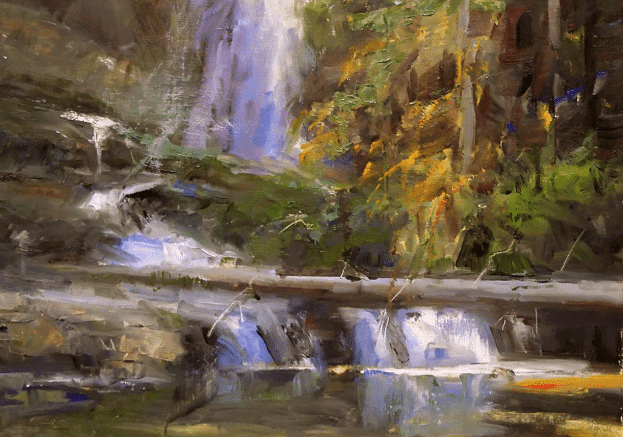
하워드 프리들랜드, "버지니아 폭포 다시 방문하기"(세부). 프리들랜드의 기법은
찰스 호손의 생동감 넘치는 "색채의 점들" 접근법과 크게 다르지 않으며, 폭포를 그리는 영상도 있습니다.
"더 큰 붓을 휘두르세요. 얼마나 즐거운 시간을 놓치고 있는지 모르실 겁니다."
찰스 호손은 세상을 떠난 후 미망인이 모아서 펴낸, "호손의 그림"이라는 제목의
작고 소중한 책에서 이렇게 썼습니다.
큰 붓은 너무 성급하게 성급하게 그림을 그리지 않도록 도와줍니다.
"이야기를 들려주는 것은 큰 색채의 점입니다." 호손은 말합니다.
"큰 톤을 만들고 그것을 사실적으로 표현하세요… 자연을 올려다보며 한 번에
한 인치씩 생각하지 마세요."
큰 붓은 그렇게 하는 데 도움이 됩니다. "제대로 그리려고" 애쓰지 않아도 됩니다.
큰 붓이나 팔레트 나이프를 사용하여 그림을 그린다면 디테일이나 정밀함에
신경 쓸 필요가 없습니다. 효과가 없을 테니까요. 포기하고 자유롭게 물감을 흩뿌려야 합니다.
캔버스 위에서 하는 일과 생각과 감정을 연결하는 훌륭한 방법입니다. 단순히 하려고 하는 일뿐 아니라요.
또 다른 방법은 작은 그림을 그리는 것입니다.
물론 조건이 있습니다. 자유롭게 그림을 그리고 싶다면, 모든 것을 완벽하게 통제할 수 없다는
사실을 받아들여야 합니다. 물감을 놓아주고, 물감 자체를 물감으로 남겨두어야 합니다.
그림을 완성할 때까지, 물감을 칠하고 그대로 두는 방식으로 그림을 완성해 보세요.
그림을 완성하면 다시 칠하고 정리할 수 있다고 스스로에게 말하세요.
하지만 가능하다면 그림을 제쳐두고 내일 정리하는 것도 좋습니다.

"작은 그림에는 정말 많은 이점이 있어요!" 티파니 망은 말한다.
"저는 모든 학생들에게 그렇게 시킵니다. 4x5인치, 혹은 그보다 더 작은 크기로 작업하고,
큰 붓으로 작업하면 정말 단순화할 수밖에 없는데, 제가 학생들에게 가장 강조하는
부분이기도 합니다. 디테일을 건드릴 수 없기 때문에, 잘 디자인된 형태에 의존해서 응집력 있는
그림을 그려야 합니다. 가독성과 통일성이 목표이지, 디테일이 목표는 아닙니다.
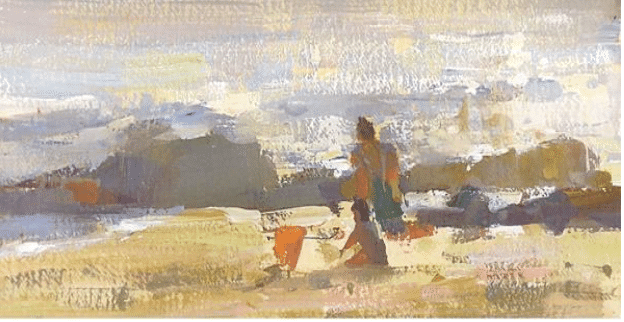
작은 그림으로 작업하는 것도 큰 도전입니다. 누가 도전을 마다하겠습니까?
야외 그림을 그릴 때 시간이 부족할 때는 작은 공간에 컬러 노트를 빠르게 적어 두는 것이
매우 효과적입니다. 또한, 머릿속을 딴 데로 돌려놓고 익숙하지 않은 연습으로
도전해 보는 것도 좋습니다. 더 큰 그림을 다시 그리게 되면 이전에는 발견하지 못했던
새로운 깨달음과 개념을 발견하여 더 큰 그림에 적용할 수 있을 거라고 장담합니다.
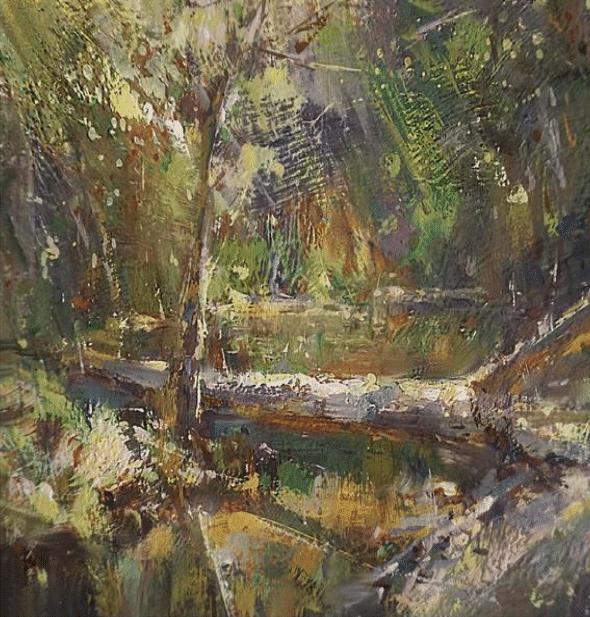
큰 붓이든, 작은 캔버스든, 아니면 다른 어떤 것이든, 저는 호손의 의견에 동의합니다.
"크게 그리는 것"은 "크게 보는 것"과 같으며, 작품에 자신을 더 많이 담는 데
도움이 될 수 있습니다. 호손은 "큰 화가는 보고 행동하는 사람이고,
작은 화가는 항상 낙타털 붓으로 간지럽히는 사람입니다."라고 말합니다.
"저는 크고 훌륭하며 정직한 것을 간절히 바랍니다."
Howard Friedland, “Virgina Falls Revisited” (detail). Friedland, whose method is not that different from Charles Hawthorne’s vibrant “spots of color” approach, has a video on painting waterfalls.
“Swing a bigger brush – you don’t know what fun you are missing.”
So wrote Charles Hawthorne in a little gem of a book assembled by his widow upon his passing titled, Hawthorne on Painting.
A big brush keeps you from getting too fussy too soon. “It is the large spot of color that tells the story,” Hawthorne says. “Make the big tone and make it true…Don’t look up at nature and consider an inch at a time.”
Big brushes help you do that. They free you from trying to “get it right.” If you’re using a big brush or a pallet knife to paint, you simply can’t worry about detail or precision – it won’t work. You must give up and give yourself the freedom to throw some paint around. It’s a wonderful way to connect what you’re doing on the canvas with what you’re thinking and feeling and not just what you’re trying to do.
The other way to go is to paint a smaller painting.
Of course there’s a catch. If you want to paint loose, you must accept that you won’t be in complete control. You must let go and let the paint be the paint. Try to make it to the end of the painting by putting it on and leaving it on. Tell yourself that when you reach the end you’ll get to go back in and clean it up – but, if possible, put the painting aside and do the cleaning up tomorrow.
There are so many benefits from working small!” says Tiffanie Mang. “I make all my students do it. Working small — 4 x 5 inches or even smaller — AND working with a big brush really forces you to simplify, which is the NUMBER 1 thing I tell my students to do. Since you cannot fiddle with detail, you are forced to rely on well designed shapes to form a cohesive painting. Readability and unity is the goal, not detail.
“It is also a great challenge to work small, and who doesn’t love a challenge? For plein air when you are on a time restraint, it can be very beneficial to jot down quick color notes on a small area. It is also good to throw your brain off course and challenge it with exercises it is not used to, because I guarantee that when you go back to painting bigger, you will discover new realizations and concepts to apply to your bigger paintings that you didn’t find before.”
Big brush, small canvas, or otherwise, I’m with Hawthorne in believing that “painting big” is akin to “seeing big” and can help you put more of yourself into the work. “The big painter is one who looks and does, the little painter is always tickling with a camel’s hair brush,” Hawthorne says. “My plea is for something big and fine and honest.”


