
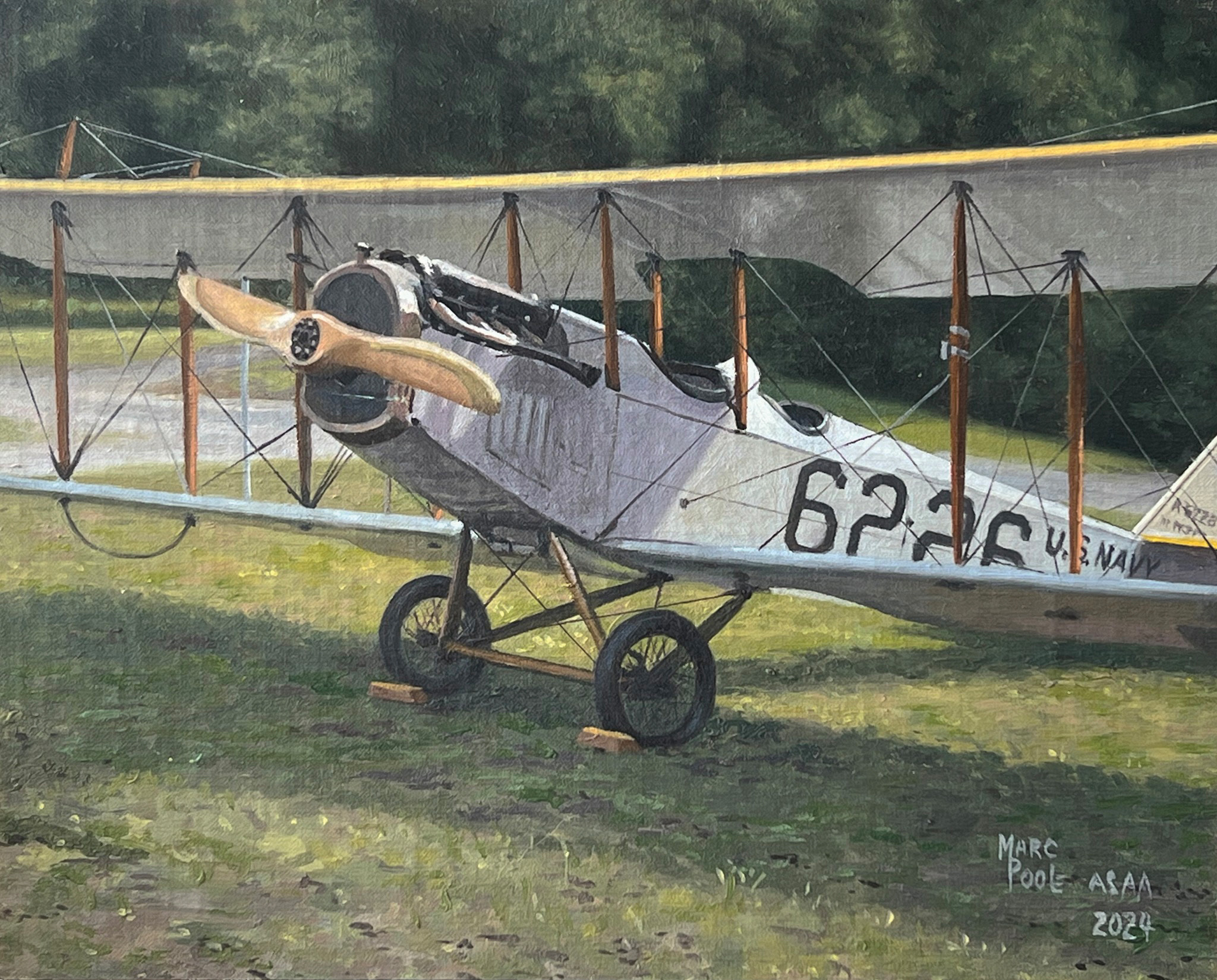
Plein Air 에 재미있는 기사 하나..
내가 앞으로 비행기 그릴 일은 없겠지만 그냥 기사가
재미있고 또 그림에서 표현하는 방법들을 보는 것도 공부가 되어 옮긴다.
용산 전쟁 기념관에 가면 많은 비행기들이 전시되어 있는데 한번 시도해볼까 ...
(변역은 구글..영어 원문은 맨 뒤에 )
==================================================
비행기를 그리는 화가들은 난제에 직면합니다. 우아한 비행기를 사실적으로 묘사하려면
비행 중인 모습을 그려야 하는데, 다른 비행기에서 옆에서 바라보는 것이 아니라면
사실상 불가능합니다. 박물관이나 격납고 안에 있는 비행기를 그리는 것도
하나의 방법이지만, 반짝이는 동체에 하늘과 착륙장에서 반사되는 빛을 실내에서는
표현할 수 없습니다.
따라서 야외에서 직접 그리는 것이 항공 미술가들에게 필수적인 요소가 됩니다.
이러한 어려움에 더해, 항공 미술은 매우 세밀한 작업 과정을 요구합니다.
미시시피 출신의 항공 미술가 마크 풀은 "항공 미술에는 '리벳 세기'라는
용어가 있습니다."라고 말합니다. "그림에서 조금이라도 실수를 하면 바로 지적을
받게 되죠." 어떤 화가들은 이런 세밀함에 집착하는 것을 좋아할 수도 있지만,
대부분은 그렇지 않을 것입니다. 하지만 어쩌면 그림에 담긴 세부 묘사 그 자체보다,
화가가 그 디테일의 존재를 인지하고 암시적으로 표현하는 것이 더 중요할지도 모릅니다.
"우선, 주제를 제대로 알고, 가능한 모든 것을 연구하고 배우는 것이 중요하다고
생각합니다."라고 항공 미술 분야의 베테랑이자 역사적 정확성에 정통한 노스캐롤라이나
출신 화가 러셀 스미스는 말합니다. 그는 항공 미술 분야에서의 성공 외에도
서부 미술 분야에서도 명성을 쌓았습니다. 서부 미술 수집가들은 안장형 모델이 언제
출시되었는지, 특정 권총이 언제 시장에 나왔는지 정확히 알고 있습니다.
그들에게는 어떤 오류도 용납되지 않습니다.

실수의 함정
세부 묘사가 중요한 장르에서 작업하는 예술가는 두 가지 선택을 할 수 있습니다.
세부적인 부분을 그대로 받아들이거나, 관객의 기대치를 바꾸는 것입니다.
어느 쪽을 선택하든, 누구도 모든 것을 알 수는 없다는 사실을 기억하는 것이 중요합니다.
스미스는 "물론, 예술가들이 항공학을 공부한다는 사실조차 모르는 자칭 역사학자들이
있지만, 자신도 모든 것을 알지 못한다는 사실을 인정할 만큼 열린 마음을 가져야
합니다."라고 말합니다. "누군가 다가와 '이 부분은 틀렸어요.'라고 말하면,
한 발짝 물러서서 다시 생각해 볼 용의가 있어야 합니다. 솔직히 처음에는 방어적인
태도를 취하게 되지만, 그 사람이 맞는지 생각해 봐야 합니다."
풀은 덧붙여 말했습니다. "항공 미술 분야에 종사하는 우리 대부분은 지나치게 꼼꼼한
경향이 있지만, 꼭 그래야만 하는 건 아닙니다. 좀 더 자유로운 표현을 원하죠.
하지만 효율적으로 그림을 그리는 건 어렵습니다. 그래서 저는 야외에서 그림을 그리기
시작했습니다. 그림을 그리는 데 걸리는 시간을 제한하기 위해서였죠.
스튜디오에서 마무리 작업을 하긴 하지만, 현장에서 포착했던 자유로운 느낌은
그대로 유지합니다. 어쨌든 그게 바로 야외 그림의 본질이니까요."
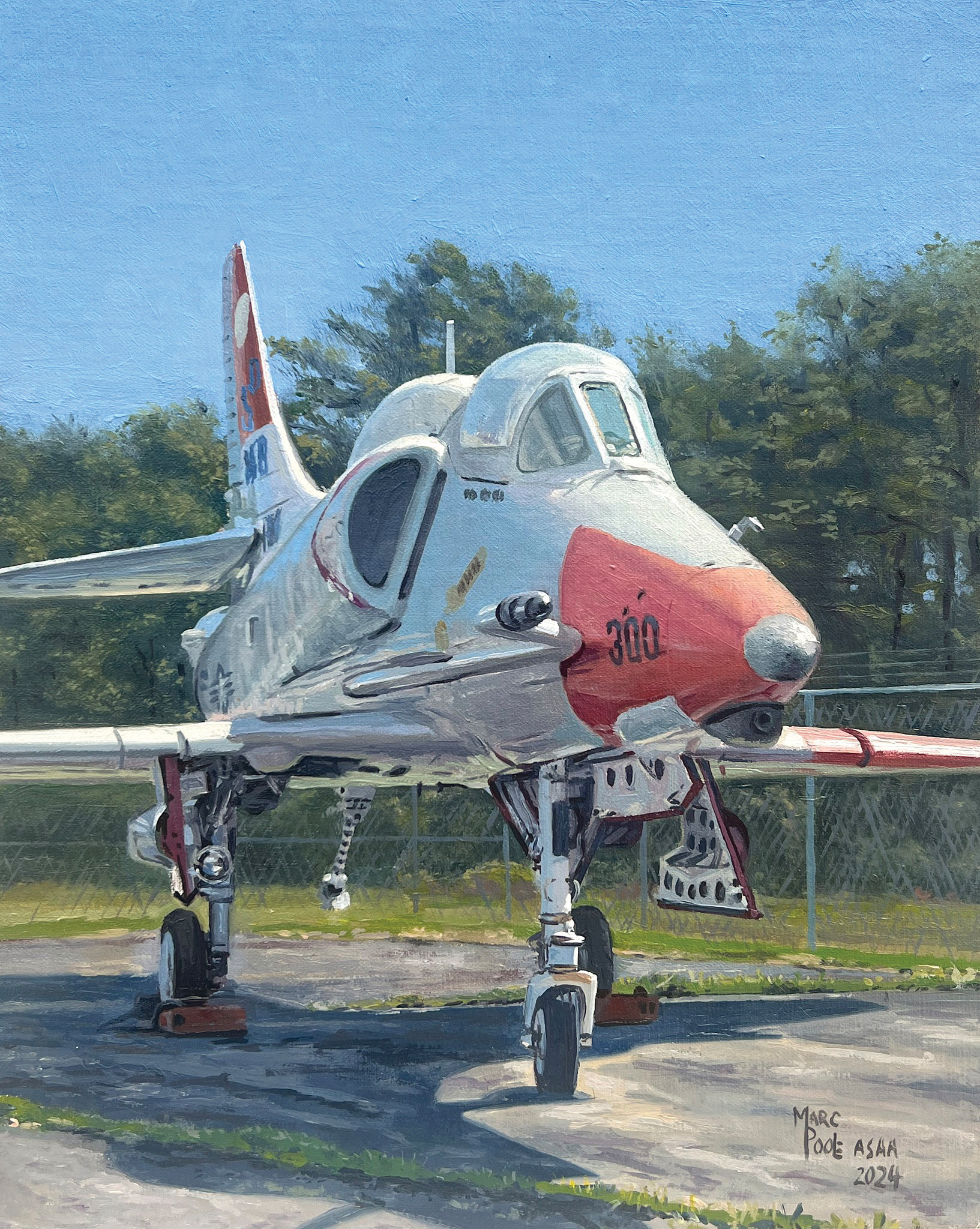
항공 예술가들은 관객과 수집가 모두에게 공감대를 형성할 수 있습니다.
스미스는 "세부적인 부분이 빠져 있다면, 실제 사건을 묘사하고 있더라도 전체적인
이야기를 가장 잘 전달하는 방식으로 표현해야 한다는 점을 분명히 합니다.
작은 디테일이 전체적인 이야기 흐름을 방해하는 것을 원하지 않습니다."라고 말합니다.
게다가, 지나치게 사실적인 묘사는 비행 중인 비행기를 보는 듯한 생생한 경험을
제대로 전달하지 못합니다. 스미스는 "저는 항상 '내가 무엇을 볼까?'라고 자문합니다."라고
말합니다. "만약 제가 실제로 비행기 옆에서 비행하고 있다면, 작은 디테일까지 보일까요,
아니면 그냥 스쳐 지나가는 흐릿한 모습만 보일까요? 분명 어떤 디테일은 보겠지만,
세밀하게 묘사하기보다는 그것을 암시하는 것이 더 중요합니다."
풀은 이러한 문제를 많은 야외 풍경화가들이 사용하는 방식과 유사하게 해결한다고
말합니다. 즉, 전체적인 모습에서 구체적인 부분으로 나아가고, 원하는 완성도에
도달할 때까지 형태를 더욱 세분화하는 것입니다. 그는 "학생들에게 그리고 있는
대상을 잊고 추상화하라고 가르칩니다."라고 말합니다. “사물을 그대로 재현하는 게
아니라, 빛이 그 사물에 어떻게 비치는지 그리는 겁니다.
대상을 보는 데 위축될 수 있기 때문에 까다롭죠.
하지만 보고 있는 것을 잊고 공간적 관계에 집중하세요.”
그는 이어서 설명합니다. “저에게는 끊임없는 미화 과정입니다. 시작하는 게 항상
가장 두려운 부분이죠. 처음 몇 번 붓질을 하고 나면 엉망으로 보일 수도 있지만,
결국엔 완성될 겁니다. 저는 농장에서 자랐는데, 소떼를 몰아가는 것과 비슷해요.
원하는 위치에 사물을 배치하는 거죠. 실수, 아니 제가 더 좋아하는 표현으로는
‘제안’들을 차근차근 다듬어 나가면서 사물이 제자리에, 원하는 방식으로 자리 잡도록 합니다.
저는 여백을 찾습니다. 마치 찰흙 덩어리를 빚는 것처럼, 작업하면서 부정확한 부분을
수정해 나가는 거죠.” 풀은 배경에서 전경으로, 큰 형태에서 작은 형태로,
큰 붓에서 작은 붓을 사용하며, 대상의 가장 명확한 부분에서 가장 미묘한 부분으로
옮겨가며 그림을 그린다고 말합니다.
주어진 환경을 최대한 활용하라
산을 그리고 싶다면 언제든 준비가 되면 산이 그 자리에 있을 것입니다.
원하는 날씨를 골라 작업대를 설치하고 그림을 그리세요. 하지만 비행기는 움직입니다.
항공 화가들이 그리는 비행기는 대개 오래된 기종이기 때문에, 풀이나 스미스 같은 화가들은
에어쇼 기간처럼 짧은 시간 동안만 비행기를 포착할 수 있습니다.
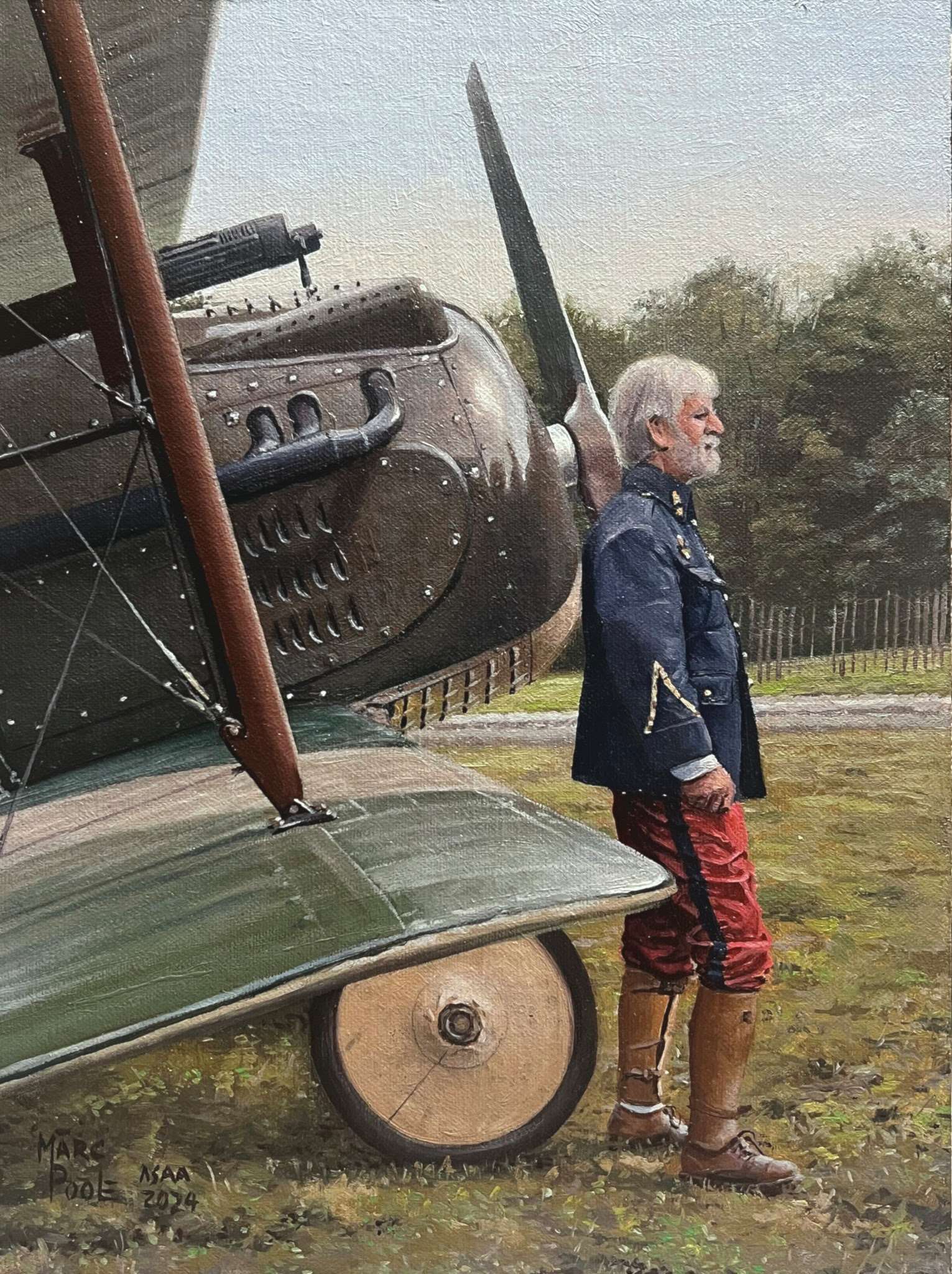
“주어진 상황에 맞춰 작업하는 거죠.” 풀이 말합니다. “날씨가 어떨지는
절대 알 수 없으니까요. 시간이 촉박할 때는 계획을 세우곤 합니다.
역광 장면은 정말 재미있어요. 빛을 향해 작업하면서 색 혼합 기법을 시험해 볼 수 있어서
좋거든요. 때로는 원하는 대로 되고, 때로는 그렇지 못하기도 하죠. 비행기가 이륙할 때도 있고,
비가 내리기 시작할 때도 있어요. 경험이든 그림이든 있는 그대로 받아들여야 합니다.
저는 그런 것들이 경험 그 자체이기 때문에 크게 신경 쓰지 않아요.
무슨 일이 일어나든 항상 무언가를 배우게 되니까요.”
스미스는 이렇게 말합니다. “보통 현장에서 그림을 그릴 때는 역사적인 사실을 그대로
옮기지는 않아요. 1차 세계 대전 당시 항공기에 대한 정보는 어느 정도 있어서 꽤 정확하게
묘사할 수 있지만, 동시에 알려지지 않은 부분도 있어서 창의적으로 표현할 수 있죠.
야외에서 그리는 작업은 비행기 표면 위로 빛이 어떻게 흐르는지 연구하기 위한 개인적인
습작입니다. 야외에서는 그 순간을 포착해서 그리죠. 역사적 정확성을 위해서는
스튜디오로 돌아가서 자료를 조사합니다.”
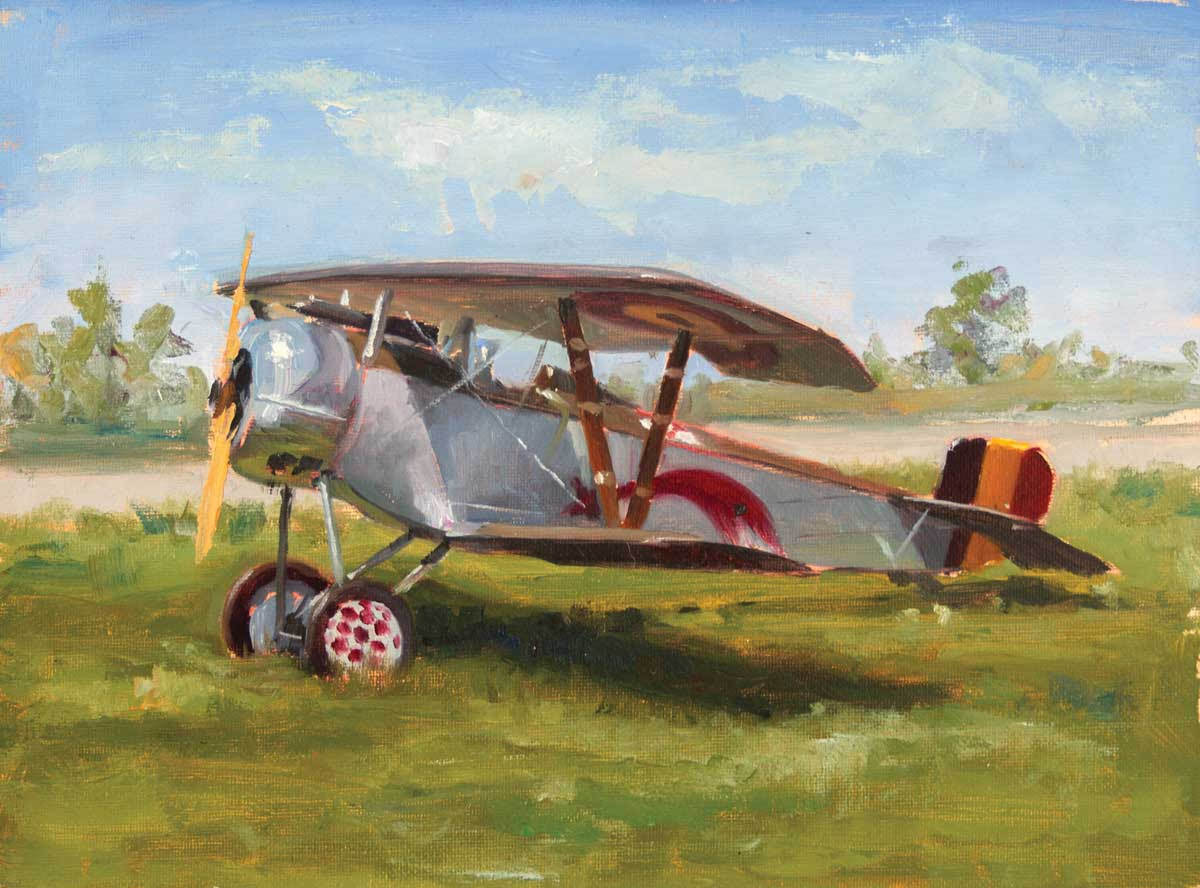
항공 예술품 수집가들은 비행 중인 비행기를 묘사한 작품에 매료되는 경향이 있는데,
이는 항공 예술가들에게 또 다른 어려움을 안겨줍니다. 스미스는 "야외 풍경화는 대상을
주변 환경 속에 배치하는 것이기 때문에 비행기를 그릴 때는 공중에 떠 있는 모습을
그려야 합니다."라고 말합니다. "저는 보는 사람에게 시간과 장소, 그림 속에 있는 듯한 느낌을
주고 싶습니다. 그러기 위한 가장 좋은 방법은 빛을 잘 활용하여 보는 사람이 마치 그곳에
있는 것처럼 느끼게 하는 것입니다." 비행 중인 비행기를 그리는 것은 사실상 불가능하며,
실제 빈티지 비행기를 구하려면 여행과 시간적 여유가 필요합니다.
그렇다면 해결책은 무엇일까요? 어린 시절 취미였던 모형 제작으로 돌아가는 것입니다.
스미스는 "저는 축소 모형을 만들어서 야외에서 그립니다."라고 말합니다.

"20년 넘게 모형 비행기를 한쪽에 치워두고 있었는데, 어느 날 고객 중 한 분이
회사에서 만든 무료 키트를 보내주겠다고 제안했습니다.
조립하면서 보니 너무 정교해서 밖으로 가져가서 색칠하고 빛에 비친 모습을 볼 수도
있겠다는 생각이 들었습니다."
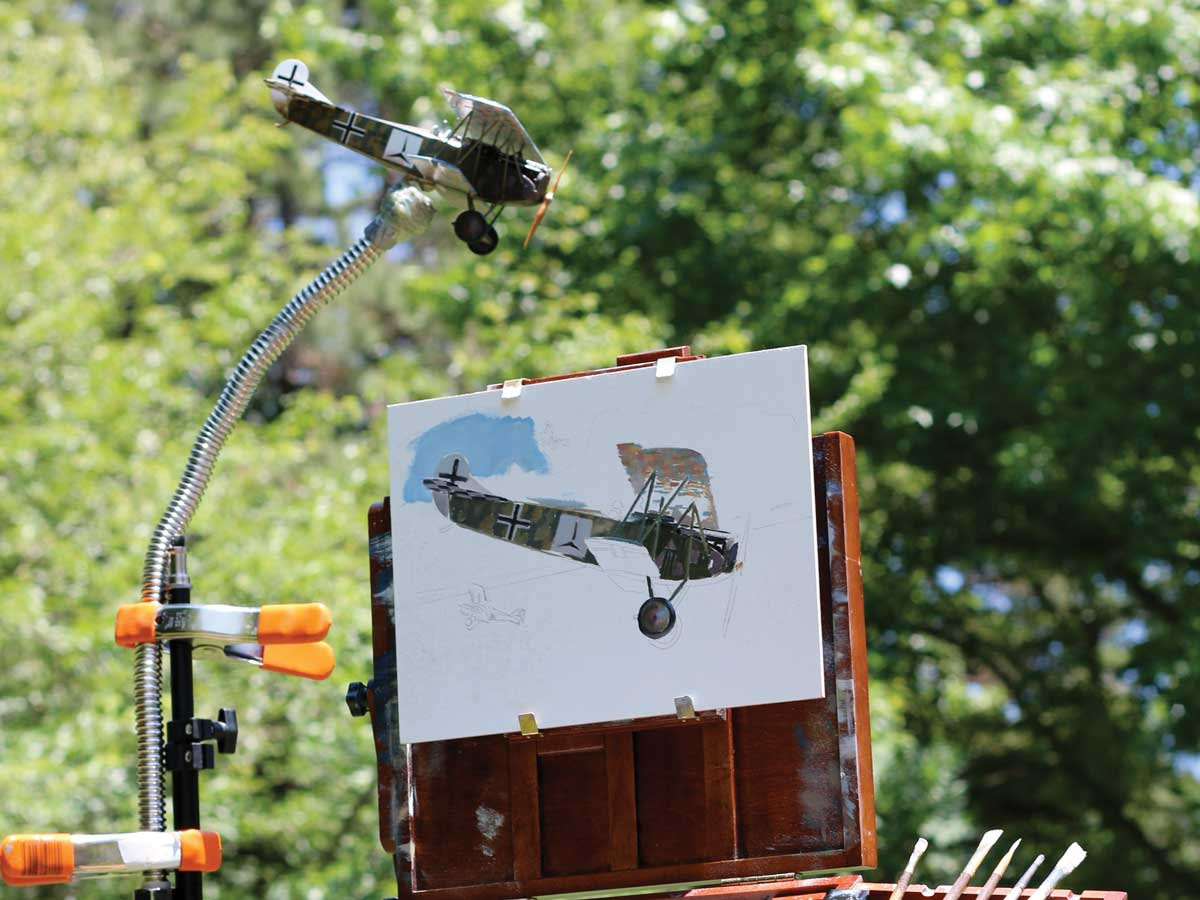
이 화가는 제1차 세계 대전 당시의 비행기를 특히 좋아하는데, 영국 비행기는 칙칙한
위장색으로 칠해진 반면 독일 비행기는 다채로운 색상을 자랑했습니다.
당시 비행기 동체는 캔버스 천에 "도프"(플라스틱 래커)를 칠해 광택과 반투명성을
부여한 경우가 많았습니다. 이러한 빛 효과를 잘 표현하는 화가라면 마음껏 창의력을
발휘할 수 있습니다. 스미스는 "캔버스에 도프를 칠해 천을 팽팽하게 만들었기 때문에
정말 멋진 반사 효과를 얻을 수 있습니다."라고 설명합니다.
"하늘의 푸른색이나 동체에 있는 로고가 날개에 반사되는 모습까지 볼 수 있죠.
제대로 표현했을 때의 느낌은 정말 특별합니다."
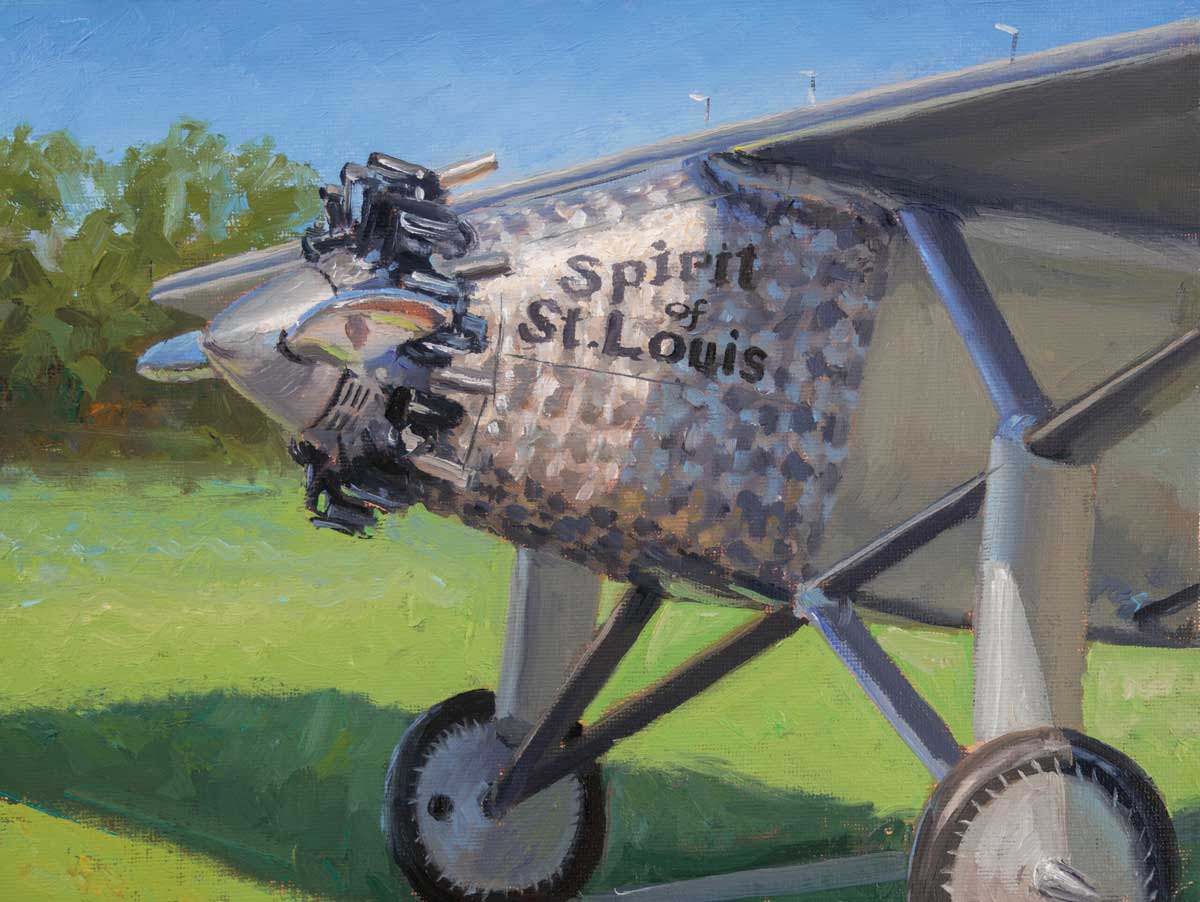
금속으로 만들어진 비행기는 종종 반짝거리고 반사율이 높았습니다.
찰스 린드버그의 비행기, 스피릿 오브 세인트루이스를 떠올려 보세요.
스미스는 린드버그의 비행기를 그리고 싶어 했는데, 그 이유는 금속 엔진 덮개의
독특한 질감 때문이었습니다. 엔진 덮개는 붓질이나 다른 마감 처리를 통해 얼룩덜룩하고
다양한 표면을 가지고 있었습니다. 그는 같은 제조사인 라이언 항공의 비슷한 비행기를
작업하고 있었는데, "스피릿 오브 세인트루이스"를 그리면서 그 독특한 특징을 확실하게
표현할 수 있었습니다. 도료로 코팅되었든 반사되는 알루미늄으로 만들어졌든,
비행기 외관에는 많은 부분이 반사됩니다.
항공 미술가들이 직면하는 어려움과 고려 사항은 이와 같습니다.
축소 모형을 뒷마당의 햇볕 아래에 놓아두더라도 작가는 조정을 해야 합니다.
스미스는 "축소는 모든 것을 바꿉니다."라고 말합니다. "축소 모형의 복엽기는 날개 사이
간격이 2.5인치인 반면 실제 비행기는 5피트입니다. 2인치 차이로 인해 그 공간으로
들어오는 빛의 양이 훨씬 줄어듭니다. 그래서 그것을 확대하여 그림으로 그릴 때는
그림자를 더 밝게 만들어 그 차이를 보정합니다."
자신만의 분야 찾기
스미스는 제1차 세계 대전 비행기에 집중하기로 결정했는데, 이는 제2차 세계 대전
비행기 시장보다 경쟁이 덜 치열했기 때문입니다. 그의 또 다른 주요 장르인 서부 미술은
다른 형태의 교통수단인 말이 주를 이룹니다. 그는 "말을 좋아하는 사람들과 비행기를
좋아하는 사람들 사이에 공통점이 많다는 것을 알게 되었습니다."라고 말합니다.
"대학 시절, 당시 여자친구는 승마 선수 집안 출신이었는데, 그녀의 아버지는 비행기도
몇 대 가지고 계셨어요. 그리고 1차 세계 대전 당시 조종사들 중 상당수가 기병 출신이었고,
그들의 전통을 많이 가져왔죠. 예를 들어, 비행기에 탈 때는 항상 왼쪽으로 들어가는데,
그건 말을 탈 때도 항상 왼쪽으로 타기 때문이에요."

풀은 어린 시절부터 비행기에 매료되었습니다. 그의 아버지는 공군이었고,
어머니를 독일에서 만났습니다. 그는 TV 프로그램 '바바 블랙 쉽'을 보며 자랐고,
1976년 영화 '미드웨이 해전'에 푹 빠져 있었습니다. 그에게 비행기 그림은 직업이라기보다는
열정에 가깝습니다. 그는 모형 비행기를 조립하고 키트 상자 뚜껑에 그려진 그림을
유심히 살펴보던 어린 시절을 기억합니다. 2001년 미시시피 주립대학교에서 미술 석사
학위를 받은 그는 미술 교육의 길을 선택했습니다. "돈 때문에 그림을 그리고 싶지
않았어요."라고 그는 말합니다. "저 자신을 위해, 그리고 배우고 싶었습니다.
순수한 그림에 대한 사랑 때문에 그림을 그리고 싶었어요." 그는 미시시피 걸프 코스트
커뮤니티 칼리지에서 17년간 학생들을 가르쳤고, 2년 후 은퇴할 계획입니다.
"이제 다시 전업 학생이 될 준비가 됐습니다."라고 그는 말합니다.
은퇴 후에도 그는 해병대 국립박물관의 전투 미술 프로그램에서 민간인 화가로
활동하며 그림을 그리는 일을 계속할 예정입니다. “주요 임무는 부대에 합류하여
현장에서 보고 경험하는 것을 기록하고 포착하는 것입니다.
하지만 재단을 위해 박물관 소장품의 빈틈을 채워줄 대형 역사 작품을 제작할 수 있는
특별한 기회도 얻었습니다.”라고 풀은 말합니다. “저는 현장의 숨겨진 이야기를 조사하고,
그곳에 있었던 참전 용사들과 이야기를 나누며 그들이 겪었던 역사를 배웁니다.”
풀은 이 프로그램을 위해 10점 이상의 대형 그림을 완성했습니다.
라인벡 SPAD(공중정비행대)처럼 조종사를 그리는 것은 사람과 비행기를 묘사하는 데
있어 유사점이 많기 때문에 이러한 역사 작품에 도움이 됩니다.
결국 항공 관련 그림이란 비행기의 초상화가 아니겠습니까?
-------------------
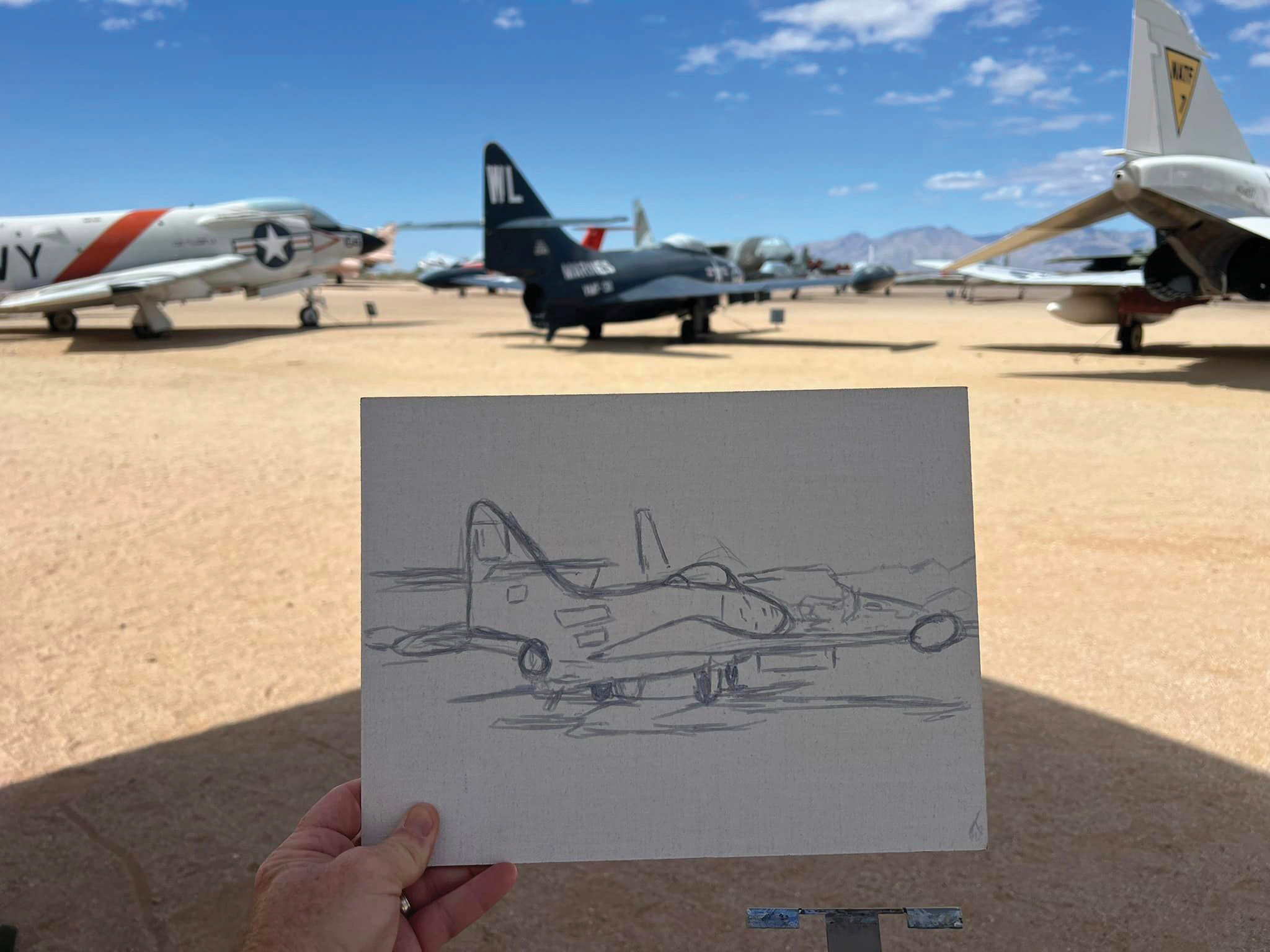
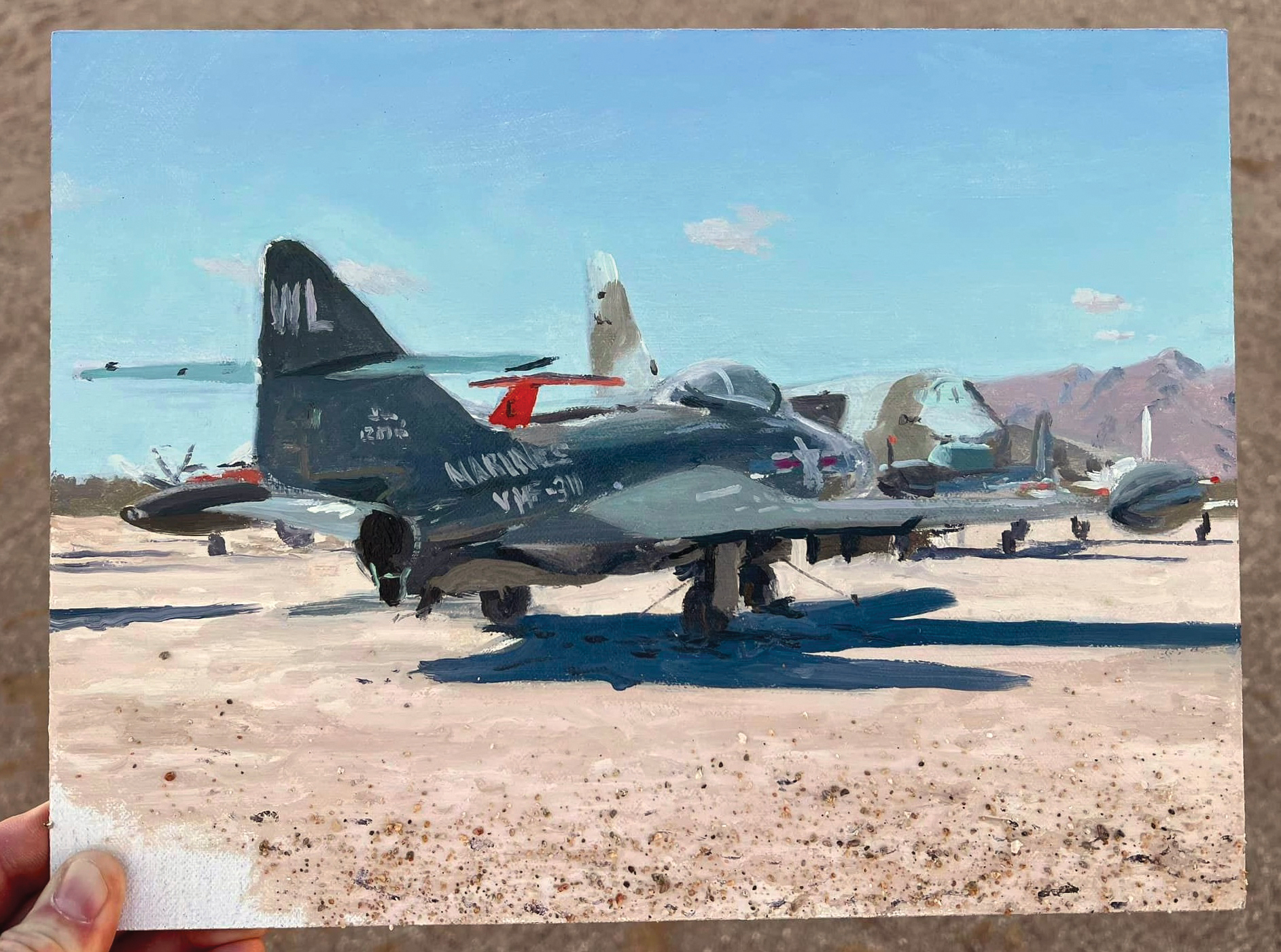
현장에서의 시연 과정...

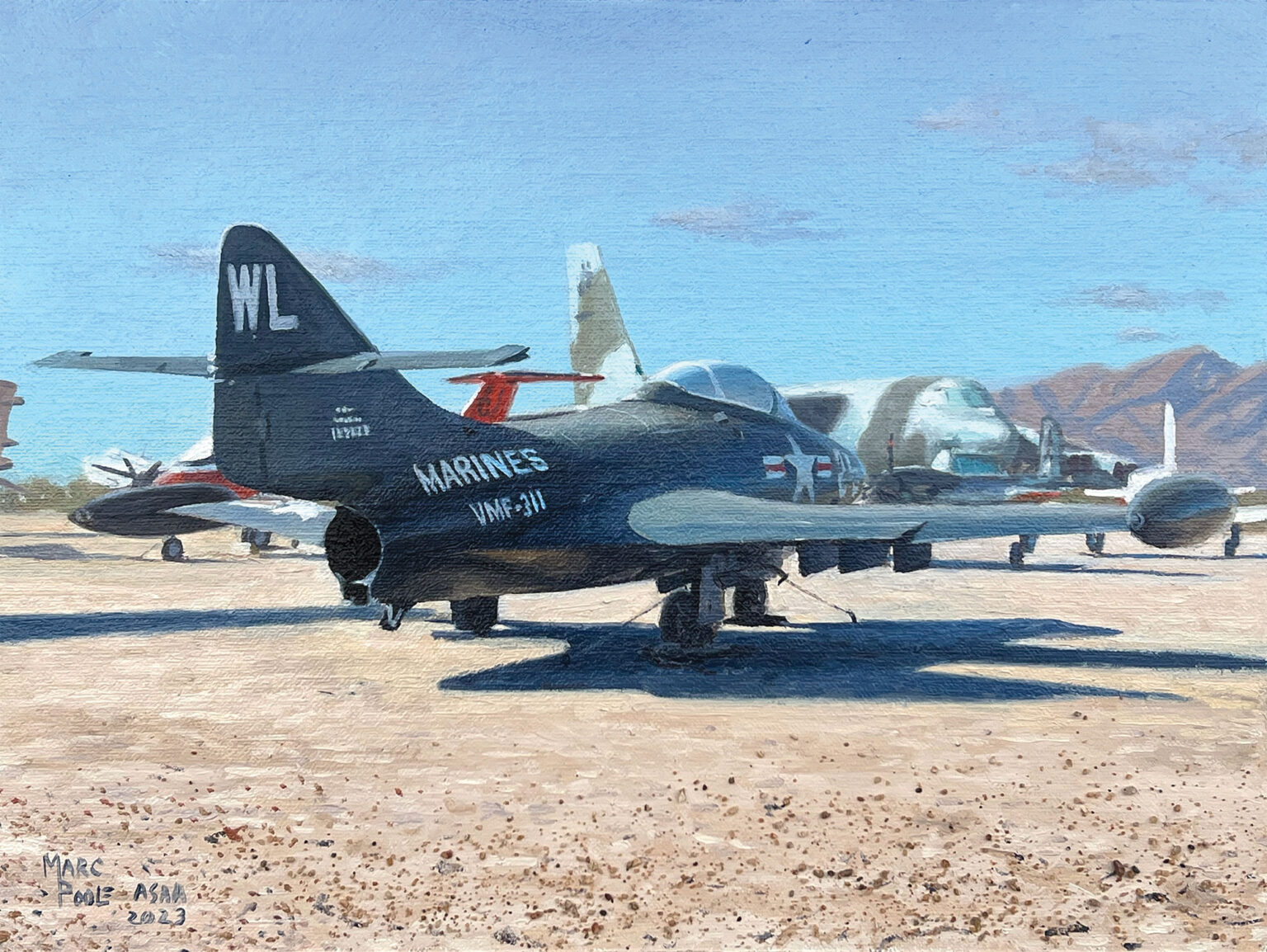
Painters who depict airplanes face a conundrum: to realistically render the elegant machines in action means portraying them in flight. Short of painting them from another plane flying alongside them in the sky, however, this is essentially impossible. Painting them as they sit inside a museum or hangar is one alternative, but their shiny fuselages can’t possibly show the bounce light from sky and land indoors. Thus, plein air work becomes crucial for the exacting needs of aviation artists.
Adding to the complexity, this genre can be very exacting. “In aviation art, there’s a term called rivet counting,” says Marc Poole, a Mississippi aviation artist. “If you get something wrong in a painting, you’re going to hear about it.” Some artists may like that kind of obsession with detail; likely most will not. But perhaps the painted details matter less than the artist knowing that they are there so they can be merely suggested.
“First, I think it’s important to know your subject, to study and learn all you can,” says North Carolina painter Russell Smith, another veteran of aviation art who knows a thing or two about historical veracity. In addition to his success in aviation art, he’s made a name for himself in Western art. Collectors of that genre know when a saddle model was introduced and when a particular revolver hit the market. No errors are tolerated.
Corral Mistakes
An artist working in a detail-prone genre has two choices: embrace the minutiae, or change the expectations of the viewer. Either way, it’s important to remember that no one knows it all. “Yes, there are armchair historians who don’t realize that artists study aviation, but you have to be open-minded enough to know that you don’t know everything either,” says Smith. “You have to be willing to step back and take another look at it if someone approaches and says, ‘Hey, you got this wrong.’ Honestly, my first reaction is defensiveness, but I have to stop and consider if they are right.”
Poole adds, “Most of us in aviation art are obsessively tight, but we don’t necessarily want to be like that. We want to loosen up. But it’s hard to paint economically. That’s why I started plein air painting — to limit the amount of time I have to paint something. I do clean up the work in the studio, but I retain the looseness that I captured on the spot. That’s the spirit of it, anyway.”
Viewers and collectors can meet aviation artists halfway. “If a detail is missing, I make it clear that even though I may be depicting an actual event, I need to do so in a way that best communicates the overall narrative. I don’t want small details to get in the way of the overall story,” says Smith.
Plus, tight realism doesn’t actually present the authentic experience of seeing an airplane in flight. “I always ask myself, ‘What would I see?’” Smith says. “If I were actually flying beside the plane, would I see small details, or just a passing blur? I’m certain I would see some detail, but it’s more important to indicate it rather than make a tight rendering.”
Poole says he tackles that problem in a way that would be familiar to many plein air painters: go from the general to the specific, breaking shapes down further until the degree of desired finish is achieved. “I tell my students to forget the thing they are painting, to abstract it,” he says. “You are not recreating the thing, you are painting how the light plays on that thing. It’s tricky because you can be intimidated by the subject matter. Just forget what you are looking at and focus on the spatial relationships.”
He explains further, “For me, it’s a continual process of de-uglification. Starting is always the scariest part. After the first few marks it may look horrible, but it’ll get there eventually. I grew up on a farm, and it’s like corralling cattle. You just get things where you want them to be. Gradually corral the mistakes — or, as I prefer to call them, suggestions — until things are where and how they should be. I look for negative spaces. It’s kind of like shaping a lump of clay, working out any inaccuracies as you go.” Poole says he moves from background to foreground; from big to small shapes, using big to small brushes; and from the most obvious aspects of the subject to the least obvious ones.
Work with What You’re Given
If you want to paint a mountain, you can depend on it being there whenever you’re ready. Set up on a day with the weather you wish to paint, and have at it. Airplanes move. And because the planes aviation artists depict are often antiques, painters like Poole and Smith usually have a small window in which to capture them — for example, during airshows.
“You work with what you’re given,” says Poole. “You never know what you are going to get, weather-wise. I plot out a plan of attack when time is limited. A backlit scene is a lot of fun; I like working into the light so I can test my color mixing. Sometimes you win, and sometimes you lose. Sometimes the plane takes off, or it starts raining. You have to let the experience, or the painting, be what it is. It doesn’t bother me too much because it’s the experience for me. I always learn something, no matter what happens.”
Says Smith, “Usually when I paint on site, it’s not historical. There’s enough information on World War I aviation that I can create a pretty accurate portrayal … but with enough unknown that I can be creative with it. My plein air work is for my own personal study to understand how light flows across the surface of planes. En plein air, I paint in the moment. For historical accuracy, I go back into the studio and research the facts.”
Collectors of aviation art gravitate toward depictions of airplanes in flight, posing yet another problem for aviation artists. “Plein air is putting the subject in its environment, so if you’re painting an airplane, you have to put it in the air,” says Smith. “I like to give the viewer a sense of time and place, a sense of being in the painting. The best way to do that is to handle light so it makes them feel like they are there.” We’ve established that painting a plane in flight is essentially unfeasible, and gaining access to a vintage airplane from life requires travel and timing. The solution? Return to a childhood hobby: model building. “I build scale models and do plein air work with them,” says Smith.
“I set model airplanes to the side for more than 20 years, and then one day one of my clients offered to send me free kits from his company. As I was putting them together, I realized they were so accurate I could take them outside and paint them to see how they look in the light.”
The artist favors World War I airplanes, and while the British planes were painted in drab camouflage colors, German planes were colorful. Many examples of that era had canvas for their skin, with “dope” — a plasticized lacquer — coating the cloth, giving it both a reflective sheen and some translucency. A discerning artist can have a field day with such light effects. “Because the canvas was covered with dope to tighten it up, you get some really neat reflections,” Smith points out. “You get the blue of the sky and even perhaps the logo on the fuselage reflecting on a wing. And when you get it right, you really know it.”
Planes made of metal were often shiny and very reflective — think of Charles Lindbergh’s plane, The Spirit of St. Louis. Smith was keen to paint Lindbergh’s plane because of the unique texture of the metal cowling, which was brushed or otherwise finished to give it a mottled and varied surface. He was working on a similar plane from the same manufacturer, Ryan Airlines, and painting “The Spirit of St. Louis” allowed him to nail down that distinctive feature. Whether coated with dope or consisting of reflective aluminum, much is reflected in the plane’s exterior.
Such are the challenges and considerations aviation artists face. Even when placing a scale model in the sunlight of a backyard, adjustments must be made by the artist. “Scale changes things,” Smith notes. “With the scale model, there’s two and a half inches between the wings of a biplane instead of five feet on a real plane. Two inches allows a lot less light to come through that space. So when I scale that up to a full painting, I open up the shadows to compensate for that.”
Find Your Niche
Smith chose to focus on World War I airplanes in large part because there was less competition in that market than for World War II planes. His other main genre, Western art, is dominated by a different form of transportation: the horse. “I find that there’s a lot of crossover between horse people and airplane people,” he says. “In college, my girlfriend at the time was from a family of riders, but her father also had a couple of airplanes. And many of the pilots in World War I came from the cavalry and brought a lot of their traditions with them. For example, one always enters a plane on the left side, and that’s because you always mount a horse from the left side.”
Poole fell in love with airplanes when he was a child. His father was in the Air Force and met his mother in Germany. He grew up watching the TV show Baa Baa Black Sheep and obsessing over the 1976 film Midway. Painting planes qualifies as a passion more than a profession for him. He remembers building model airplanes and studying the art on the kits’ box tops. He earned his MFA from Mississippi State University in 2001 and chose to pursue art instruction. “I didn’t want to paint for money,” he says. “I wanted to paint for myself, and learn. I wanted to paint for the pure love of painting.” He has taught at Mississippi Gulf Coast Community College for 17 years and plans to retire in two years. “I’m ready to be a student again, full-time,” he says.
In part, the artist will be occupied by an ongoing gig he has painting for the National Museum of the Marine Corps as a civilian artist in the Combat Art Program. “The primary mission is to embed with units to document and capture what you see and experience on site. But I’ve also had the unique opportunity to create larger historical pieces for the foundation that fill in gaps in the museum’s collection,” says Poole. “I research the story behind the scene, talk with the veterans who were there, and learn about the history they lived through.” Poole has completed more than 10 large paintings for the program. Painting pilots, as in Rhinebeck SPAD, helps with these historical works as the parallels between depicting people and planes is evident. After all, what are aviation paintings if not portraits of airplanes?


