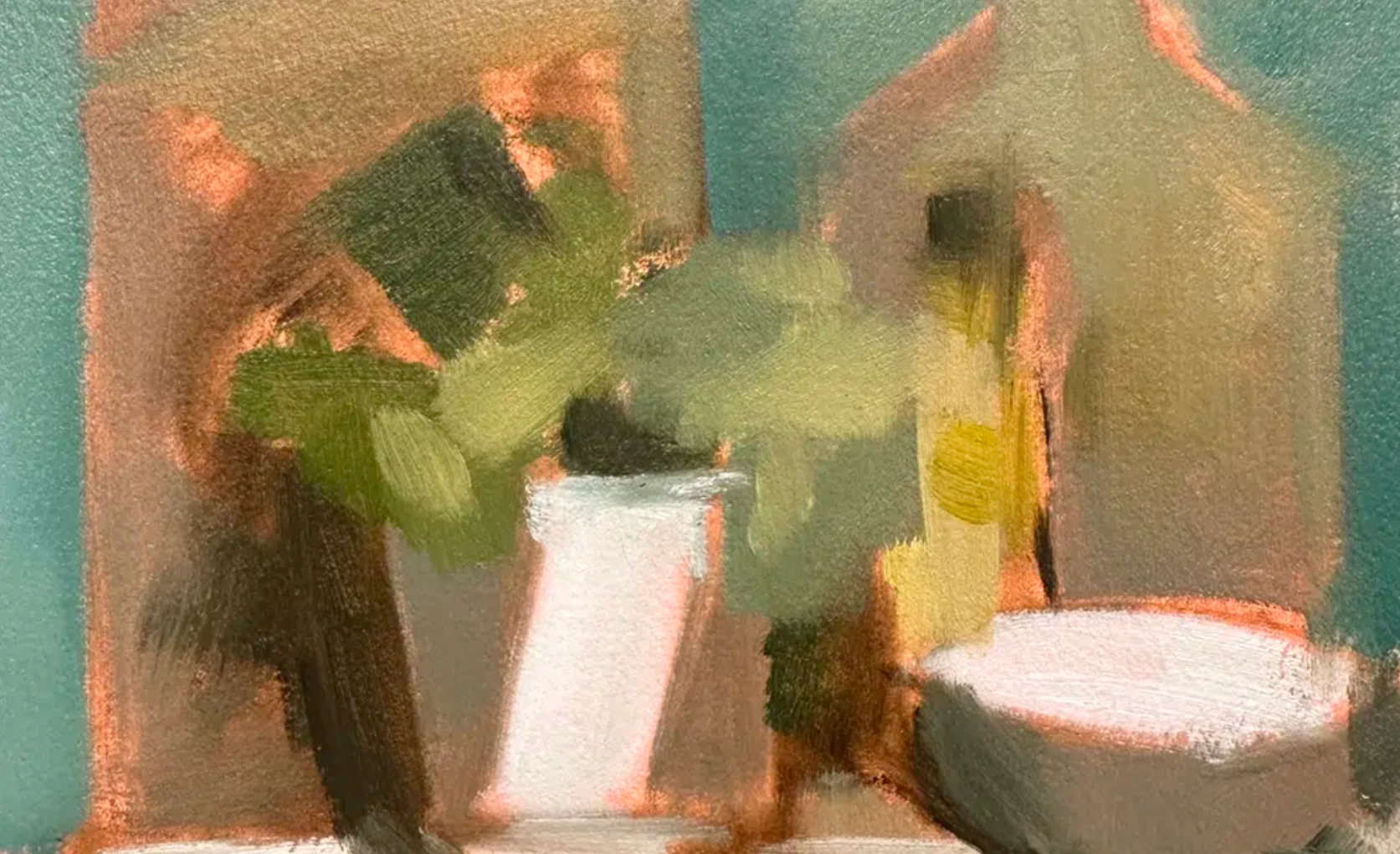
항상 그림을 그릴 때마다 생각하는 것이 그림은 사진이 아니니까 자세히 묘사보다는
자유로움으르 느낌을 살리고 싶다는 바램이다.
오늘 그림의 자유로움에 대해서 좋은 글이 있어 여기 옮긴다.
( 번역은 구글 번역, 영어 원문은 맨 뒤에 )
============================================
화가들이 가장 흔히 겪는 어려움 중 하나는 "어떻게 하면 자유롭게 그릴 수 있을까?"라는 질문입니다.
더욱 즉흥적인 표현을 위해 붓놀림을 느슨하게 하려고 애쓰지만, 결과는 자유로운 느낌보다는
오히려 어수선하게 느껴지는 경우가 많습니다.
진정한 변화는 통제력을 버리는 데 있는 것이 아닙니다.
그 이면에 숨겨진 구조를 이해하는 데 있습니다.
학생들이 저에게 가장 많이 묻는 질문 중 하나는 "어떻게 하면 더 자유롭게 그릴 수 있을까요?"입니다.
특히 세밀한 묘사에 매몰되는 경향이 있는 학생들은 그림을 좀 더 자유롭게
그리는 방법을 알고 싶어 합니다.
하지만 자유로운 그림 그리기 자체가 시작점은 아닙니다.
제 경험상, 겉보기에 자유로워 보이는 그림도 실제로는 그 이면에 통제된 단순화가 숨어 있는
경우가 많습니다. 먼저 통제력을 가지고 그림을 그리는 법을 배우면 나중에 훨씬 더 강력한
'자유로운' 그림을 그릴 수 있게 됩니다.
어수선한 그림과 자유로운 그림은 언뜻 보기에 비슷해 보일 수 있습니다.
하지만 구조적으로는 완전히 다릅니다.
자유로운 그림은 자신감 있는 수정 작업입니다.
어수선한 그림은 미처 결정하지 못한 채 그리는 것입니다.
이러한 구조적 차이가 모든 것을 바꿔놓습니다.
숨겨진 구조
Sargent나 Sorolla 같은 화가들의 작품을 보면, 표면적으로는 신선하고 즉흥적인
느낌이 듭니다. 붓질도 거의 무심코 한 듯 보입니다.
하지만 좀 더 자세히 살펴보세요.
드로잉은 견고합니다.
명암은 명확합니다.
가장자리는 의도적으로 표현되었습니다.
그리고 크기도 잊지 마세요. 처음 그림을 시작할 때는 20x25cm 정도의 작은 그림이나
스케치북에 그림을 그리면서 인터넷에서 다른 그림들을 훑어보며 "와, 저 그림들은
어떻게 저렇게 생동감 넘치고 회화적이면서도 정확할 수 있지?"라고 생각할 수 있습니다.
하지만 그림의 크기는 실제로 큰 도움이 됩니다.

돛을 꿰매는 부분은 가로 3m, 세로 2m로 엄청나게 큽니다!
가까이서 보면 작아 보이는 부분도 실제로는 상당히 큽니다.
이 부분은 대략 가로 30cm, 세로 20cm 정도입니다.

이 그림의 해당 부분을 이 크기로 복제하는 것이 가능할 것 같은 느낌이 듭니다.
'잎'은 하나의 덩어리로 칠해져 있습니다. 세부 묘사도 없고, 교묘한 색 혼합도 없습니다.
어두운 부분은 덧칠되어 있으며, 깊이감은 물감의 질감을 통해 표현됩니다.
Sorolla는 마음만 먹으면 매우 정교하게 그림을 그릴 수 있었습니다.
실제로 많은 부분에서 그렇게 하고 있습니다.
얼굴은 종종 세심하게 묘사되어 있습니다. 주변 부분은 단순화되어 있습니다.
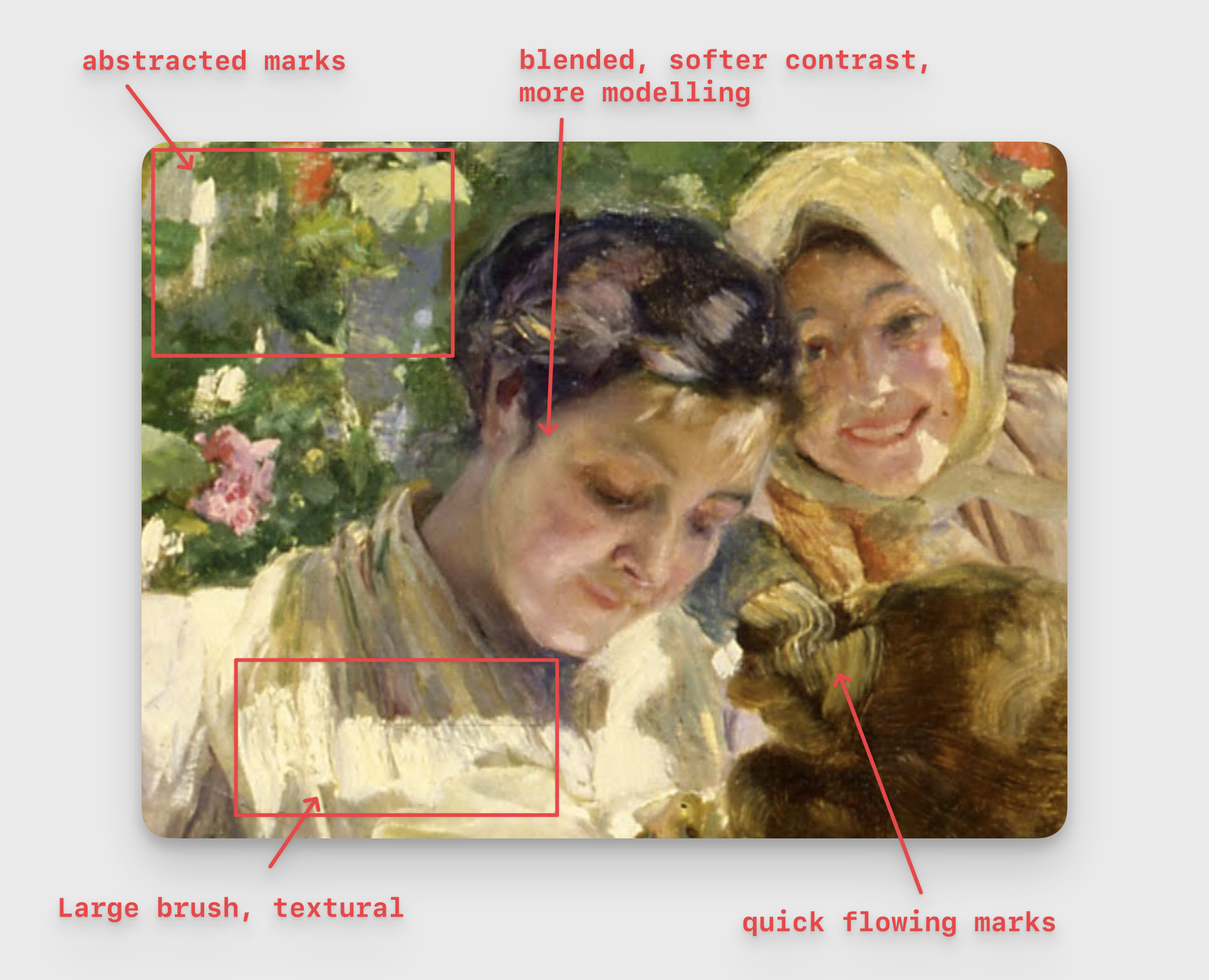
위 그림의 이 작은 부분에서도 놀라울 정도로 다양한 붓 자국이 눈에 띄는데,
상당히 사실적인 부분에서 거의 추상적인 부분까지 넘나듭니다.
또한, 흐르는 듯한 머리카락을 표현하는 데 사용된 붓이 얼굴 형태를 잡는 데
사용된 붓보다 훨씬 크다는 점도 주목하십시오.
이러한 겉보기에는 자유로운 표현이 성공적인 이유는 탄탄한 구조에
기반하고 있기 때문입니다.
드로잉은 훌륭하고, 명암은 잘 정돈되어 있으며, 색채 조화 또한 세심하게 고려되었습니다.
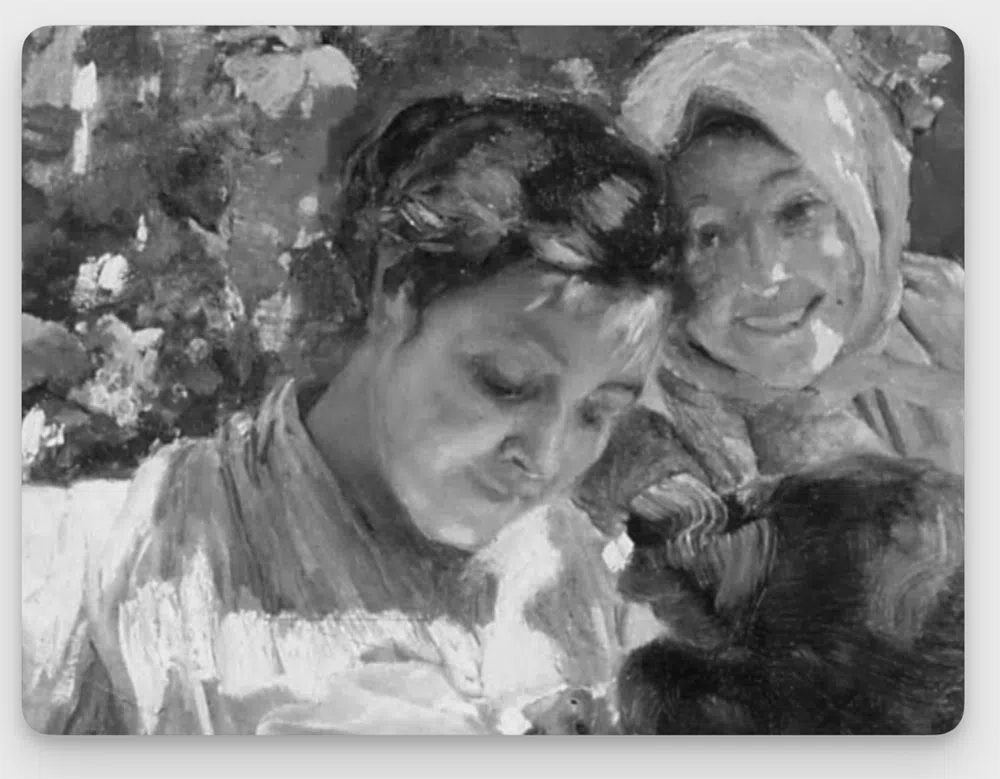
흑백 버전에서는 빛이 장면 전체에 반사되는 것을 볼 수 있고, 오른쪽 아래에 흩날리는
머리카락도 여전히 머리카락처럼 보입니다. 그리고 얼굴 주변의 추상적이고
자유로운 붓질이 더욱 뚜렷하게 드러납니다.

이미지를 흐릿하게 처리해도 색채 조화는 여전히 유지됩니다.
두 인물을 상상할 수 있고, 세부 묘사나 경계선, 붓 자국 없이도 장면을 재구성할 수 있습니다.
자유로운 표현이 설득력 있게 느껴지지 않는다면, 대개 그림이 불확실하거나,
명암 관계가 모호하거나, 붓 자국이 의도적인 것이 아니라 반응에 불과하기 때문입니다.
자유로운 그림은 통제력 부족이 아닙니다. 오히려 정보를 제거함으로써 통제되는 것입니다.
조급한 인상파 화가
자, 여러분은 이렇게 생각할지도 모릅니다. "윌, 다 좋은 말이네요. 좀 더 정교하게,
더 정확하게 그리면 자연스럽게 나올 거라고요?" 하지만 오늘 당장 그림을 그리고 싶다면
어떻게 해야 할까요? 좀 더 자유롭게 그려보고 싶다면요?
좋습니다. 붓질의 느낌을 살리고 과감한 붓질을 하고 싶다면, 제가 추천하는 방법은
다음과 같습니다.
1. 실제 사물을 보고 그리기
아주 기본적인 배경을 설정하세요. 아니, 사실 배경조차 설정할 필요가 없습니다.
집 안의 아무 곳이나 방 구석을 찾아 창밖을 내다보고 그림을 그릴 만한 것을 찾아보세요.
주제는 사실 그다지 중요하지 않습니다. 중요한 건 좀 더 과감한 결정을 내리는
연습을 하는 것입니다.
밝은 부분과 어두운 부분이 함께 있으면 명암 대비를 만들어내는 데 도움이 될 수 있지만,
구도에 너무 신경 쓰지 마세요.
2. 편안하게 느껴지는 거리보다 조금 더 멀리 떨어지세요.
만약 그림 속 대상이 팔이 닿을 듯 말 듯하다면, 그 거리의 2~3배 정도 뒤로 물러나서
겨우 보일 정도로만 보이도록 하세요. 바로 그게 원하는 겁니다.
대상의 세부적인 부분은 보이지 않도록 해야 합니다.
3. 붓 크기를 키우세요.
평소에 사용하는 붓을 하나 고르고, 그보다 2~3배 정도 큰 붓을 찾아보세요.
만약 큰 미술용 붓이 없다면, 페인트칠용 붓을 사용해도 괜찮습니다.
거칠고 넓은 붓이라도 전혀 문제없습니다. 사실 매끄러운 담비털 같은 것보다
더 나을 수도 있습니다.
4. 기본 형태를 잡고 다음으로 넘어가기
그다음에는 정확도에 너무 신경 쓰지 않고 눈에 보이는 모양, 자국, 색상을 대략적으로
그려보세요. 선을 긋고, 잠시 놔두었다가 다시 돌아오는 식으로 흐름에 몸을 맡기는 것이 중요합니다.
처음에는 자신감이 떨어질 수 있지만, 오히려 사물에 대한 인식이 높아질 것입니다.
과도한 측정이나 조심스러운 수정 뒤에 숨지 않고 더 명확하게 사물을 볼 수 있게 될 것입니다.
이러한 짧고 자유로운 연습을 통해 그림을 더 자유롭게 그리는 방법을 배울 수 있습니다.
자유로운 그림 그리기는 균형을 맞추는 것입니다.
이 두 가지 접근 방식은 완전히 반대되는 것처럼 보이지만, 여러 면에서 실제로 그렇습니다.
하나는 나중에 더 자유롭게 그릴 수 있도록 정확도를 중시합니다.
다른 하나는 아직 보완해야 할 부분을 명확하게 볼 수 있도록 자유로운 표현을 추구합니다.
두 가지 모두 가치가 있습니다. 둘 다 화가로서 성장하는 데 중요한 역할을 합니다.
일단 구조와 통제력을 갖추게 되면, 거기에 머물고 싶은 유혹에 빠지기 쉽습니다.
잘 되는 것을 반복하고, 안전하다고 느껴지는 붓 크기를 사용하고, 믿을 수 있는
결과를 가져다주는 과정을 따르고 싶어지죠.
하지만 진정한 자유로움은 적응력에 달려 있습니다.
자신의 패턴을 깨는 습관을 들이세요. 현재 방법이 잘 통하더라도 새로운 접근 방식을
시도해 보세요. 붓을 바꾸고, 표면을 바꾸고, 새로운 색을 추가하고, 시간을 줄여 보세요.
의도적으로 초심자 모드로 돌아가 보세요.
약간의 불편함을 기꺼이 감수하는 이러한 반복적인 노력이 그림에 생동감을 불어넣습니다.
판단력을 강화하고, 붓질이 기계적으로 변하는 것을 막아줍니다.
초심자 모드를 반복해서 경험하다 보면, 하나의 "스타일"보다 훨씬 더 가치 있는 것을
얻게 됩니다. 바로 유연성입니다. 그리고 유연성은 자신감 있게 단순화할 수 있게 해줍니다.
자유로움이란 단순히 붓질을 줄이는 것이 아닙니다.
더 많은 것을 할 수 있다는 것을 알면서도 그렇게 하지 않기로 선택하는 것입니다.
=============================
One of the most common frustrations painters face is “How do I loosen up?”
You try to relax your brushwork to capture something more spontaneous, but the result often feels messy rather than free.
The real shift isn’t about throwing away control. It’s about understanding the structure underneath it.
One of the most common questions students ask me is: “How can I paint looser?” Many students want to know how to loosen up their painting, especially if they tend to get stuck in careful details.
But loose painting is rarely the starting point.
In my experience, what often looks loose on the surface is actually controlled simplification underneath. Learning to paint with control first makes a far stronger ‘loose’ painting later on.
Messy and loose can look similar at a glance.
Structurally, they are completely different.
Loose painting is confident editing.
Messy painting is an undecided execution.
That difference in how they are constructed changes everything.
The hidden structure
If you look at painters like Sargent or Sorolla, their work, on the surface, feels fresh and spontaneous. The brushstrokes seem almost casual.
But slow it down.
The drawing is solid.
The values are clear.
The edges are intentional.
And also, let’s not forget the scale. When you’re first starting out and most probably painting small, 20 x 25cm, or in sketchbooks, you can flick through images online and think, ” Wow, how do those paintings look so luscious and painterly, yet still hold that accuracy?”
But the scale of the painting can really help.
Sewing the Sail,Joaquin Sorolla,1896, Oil on Canvas
Sewing the sale is 3m x 2m. It’s huge!
When you go in close, what appears to be a small element in real life is pretty large. This section is approximately 30cm x 20cm.
It feels possible to create a copy of this section of the painting at this scale. A ‘leaf’ is a solid block of colour. No details, no clever blending. The dark values are built up on top; depth is created through the paint’s physicality.
Sorolla could paint tightly if he wanted. In fact, in many areas, he does.
Faces are often carefully resolved. The surrounding passages are simplified.
In this small section of the painting above, there’s a surprising range of brushmarks, shifting from quite realistic passages to moments of near abstraction.
Notice too that the brush used for the flowing locks of hair is much larger than the one needed to model the forms of the face.
That apparent looseness succeeds because it rests on a solid structure. The drawing is sound, the values are organised, and the colour harmony is considered.
You can see in the black-and-white version that the light bounces around the scene, and the flowing hair at the bottom right still ‘reads’ as hair. And the abstracted loose brushwork around the face becomes more apparent.
When we blur the image, the colour harmony still works. We can imagine two figures; we can piece together the scene with no details, no edges, no brushwork.
If looseness doesn’t feel convincing, it is usually because the drawing is uncertain, the value relationships are unclear, or the brush marks are reacting rather than deciding.
Loose painting is not a lack of control. It is controlled with information removed.
The Impatience Impressionist
Now, I know what you might be thinking: “Well, this all sounds great, Will. Get tighter, get more accurate, and then it will flow.” But what if I wanted to paint something today? What if I just wanted to have a go at painting something more loosely?
Okay, if you want to feel the swish of the brush and make some big marks, this is what I’d recommend you do.
1.Paint from life
I’d set something up, really, really basic. Or actually, you don’t even need to set something up. Just find an area in your house, a corner of the room, look outside the window, and find anything to paint. The subject doesn’t really matter. It’s more about the actual practical getting used to making more decisive decisions.
If the subject has a bit of a light object and a dark object, that can help to give you some contrast, but don’t worry about the composition.
2. Position yourself further away than feels comfortable.
If the object is just out of arm’s reach, step back about 2 to 3 times that distance so you can just barely see it. That’s what you want. You don’t want to see any details in your subject.
3. Scale up your brush
Grab the brush you normally would go for, and then try to find one that’s about two to three times as big as that. If you haven’t got an artist brush that big, just grab a decorator’s brush. Even if it’s a rough, wide brush, that’s absolutely fine. It might actually be better than something like a sable that’s smooth.
4. Block in and move on
Then you’re just going to try and block in and paint some of the shapes, marks, and colours you can see, without really worrying about accuracy as much. You’re just trying to get into that flow of making a mark and then leaving it and then coming back to it.
When you try this, your confidence will drop at first, but your awareness will increase. You’ll start to see more clearly because you’re not hiding behind over-measuring or cautious adjustments.
You can learn how to loosen up your paintings by working on these short, freeing exercises.
Painting loose is a balancing act
These two approaches seem completely opposite, and in many ways, they are.
One leans into accuracy so that, later on, you can afford to be looser.
The other leans into looseness so you can clearly see what still needs strengthening.
Both are valuable. Both play an important role in your development as a painter.
Once you’ve built structure and control, though, it’s very tempting to stay there. To repeat what works. To reach for the brush size that feels safe. To follow the process that gives you a dependable result.
But real looseness depends on adaptability.
Make a habit of breaking your own patterns. Try new approaches even when your current method is working well. Change the brush. Change the surface. Add a new colour. Shorten the time.
Deliberately put yourself back into beginner mode.
That repeated willingness to feel slightly uncomfortable keeps your painting alive. It strengthens your decision-making. It prevents your brushwork from becoming mechanical.
When you get comfortable being a beginner again and again, you build something far more valuable than a single “style.” You build flexibility. And flexibility is what allows you to simplify with confidence.
Because looseness is not just about fewer strokes.
It is about knowing you could do more and choosing not to.
'그림공부' 카테고리의 다른 글
| ( 그림공부 ) 내면의 영감의 불꽃-The Spark of Inspiration Within (0) | 2026.03.05 |
|---|---|
| ( 그림공부 )추상 미술에 대한 진실 - The Truth About Abstract Art (1) | 2026.02.20 |
| ( 그림 공부 ) 예술가를 위한 영감: 학습 곡선(Inspiration for Artists: Learning Curve)) (0) | 2026.02.14 |
| ( 그림공부 ) 현장에서 비행기 그리기 (Painting Airplanes on Location) (3) | 2026.01.23 |
| ( 그림공부 ) 눈(snow)을 잘 그리는 방법 (3) | 2026.01.22 |


