
Inside Art 에 흥미있는 글이 있어 옮긴다.
사실 그리 대단한 이야기도 아니지만 그냥 그림에 관한 글을 읽는 즐거움이 있다.
(번역은 구글, 영어 원문은 맨 뒤에)
----------------------------------------------------------
Darryl Glenn Steele 은 “제 작품에 접근하는 방식은 단순히 사물, 나무, 바위,
꽃, 정물을 묘사하는 데 그치지 않습니다.”라고 말합니다.
“오히려 저는 순간, 즉 분위기와 빛을 포착하여 작품의 본질을 담아내는 데 집중합니다.
저는 관객들이 제가 처음 그림을 그리고 싶었을 때 느꼈던 그 매력을 그림에서
다시 느끼기를 바랍니다.”
즉흥성, 즉 영감의 순간에 온전히 반응하는 능력은 예술에 대한 헌신과 누구나
어린 시절부터 가지고 있는 경험과 영감에 대한 타고난 열린 마음이 결합될 때 나타납니다.
그는 “어린 시절부터 그림을 그리고 싶은 열망이 있었습니다.”라고 말합니다.
"어린 시절 교실 옷장에서 꺼낸 두루마리 포장지에 그려진 공룡들의 장대한 전투 장면,
형형색색의 도화지에 템페라 물감을 칠하던 감촉, 그리고 새로 뜯은 크레파스 상자의 향기가 기억납니다."
그는 "저는 항상 예술가였던 것 같습니다."라고 말합니다. "예술이 아닌 다른 일을 하면서
행복했던 시절은 상상할 수 없고, 예술이 제 삶의 일부가 아니었던 때를 기억할 수도 없습니다.
그리고 이제 오랜 세월이 흘러 손주들이 예술의 세계를 탐험하는 모습을 보면서,
우리 안에 창조하고자 하는 욕구를 불러일으키는 무언가가 있다면 그것은 우리 모두에게
타고난 것이라는 사실을 깨달았습니다. 모든 아이들은 예술가이고, 어쩌면 모든 예술가도
어떤 의미에서는 아직 어린아이일지도 모릅니다. 그림이든, 조각이든, 드로잉이든,
글쓰기든, 음악이든, 춤이든, 건축이든, 영화든, 우리 예술가들에게 공통적으로 있는 것은
내면의 영감의 불꽃이며, 예술가들을 구분 짓는 것은 단지 사용하는 매체와 과정뿐이라고 확신합니다."

돌이켜보면, 7학년 미술 선생님은 제게 두 마디 이상 말씀하신 적이 거의 없었던 것 같습니다.
하지만 교실에 들어서는 순간부터 종이 울릴 때까지, 우리는 어두컴컴한 교실에 앉아
매일 그림 연습만 했습니다. 그분께 정말 감사드립니다. 예술가가 되고 싶다면
그림을 배워야 한다는 것을 제 머릿속에 각인시켜 주신 분이 바로 그분이셨기 때문입니다.
그림이 중요한 이유 – 그리고 그림이란 무엇인가
"그림은 단순히 손과 눈의 협응력 그 이상입니다."라고 스틸은 말합니다.
"한마디로, 이해입니다. 몇 년 전 우리 동네에 와이어스 전시회가 열렸던 게 기억납니다.
전시회에는 크리스틴의 시든 팔을 그린 연필 드로잉이 여러 점 있었습니다.
와이어스는 '크리스틴의 세계'를 그리기 전에 그녀의 시든 팔을 이해해야 한다는 것을
알고 있었습니다. 저는 그가 외과의사만큼이나 그녀의 팔 해부학에 대해 잘 알고 있었다고
확신합니다. 제가 이 이야기를 하는 이유는 주제를 아는 것이 얼마나 중요한지 강조하기
위해서입니다. 훌륭한 작가들은 '아는 것을 써라'라고 말하죠.
화가들도 마찬가지라고 생각합니다..." 당신이 아는 것을 그리세요.
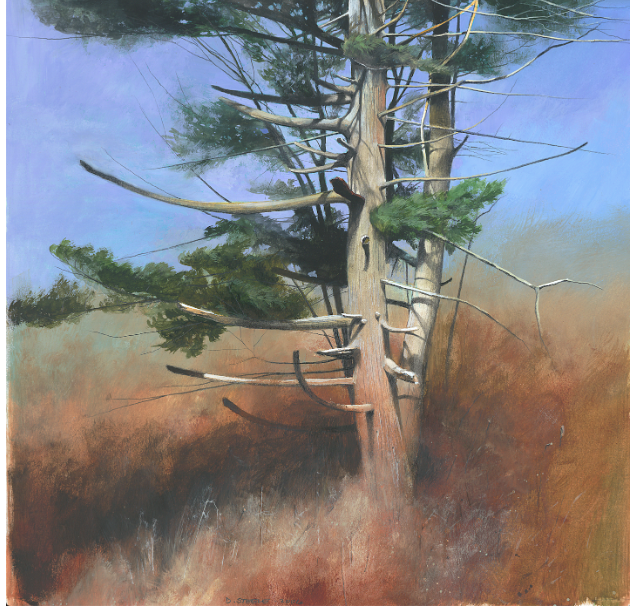
"저는 스스로를 '독학' 예술가라고 생각합니다. 정식 미술 교육을 많이 받지는 않았지만,
평생 동안 만난 모든 예술가들에게서 무언가를 배웠기에 '독학'이라는 표현은 사실 잘 맞지 않습니다.
수년간 다른 화가들의 작품을 연구하고 그들의 기법을 제 작품에 접목해 왔습니다.
이러한 노력 덕분에 저만의 독특한 스타일이 자연스럽게 생겨났습니다.
초기에는 유화 작업을 하다가 지금은 수채화에 푹 빠져 있는데,
점차 두 가지 기법을 모두 작품에 접목하는 단계로 발전해 왔습니다."
"요즘 제가 그림을 그리는 방식을 정확히 설명하기는 어렵습니다.
정해진 규칙이나 공식이 없기 때문이죠. 그림 하나하나가 저마다의 요구 사항을 가지고 있습니다.
수채화로 시작해서 유화로 덧칠하기도 하고, 아크릴 물감으로 밑칠을 하기도 하고,
때로는 휴지 조각을 붙여 질감을 표현하기도 합니다.
종이, 캔버스, 매트 보드, 메이소나이트 등 손에 잡히는 어떤 재료든 그림을 그립니다.
스프레이 페인트를 사용하거나 유화 위에 과슈 물감을 덧칠하기도 하죠.
중요한 건 제가 그림을 그릴 때 모든 규칙은 유연하게 적용되고, 때로는 완전히 깨지기까지
한다는 겁니다. 저에게 중요한 건 결과가지 수단이 아니니까요."
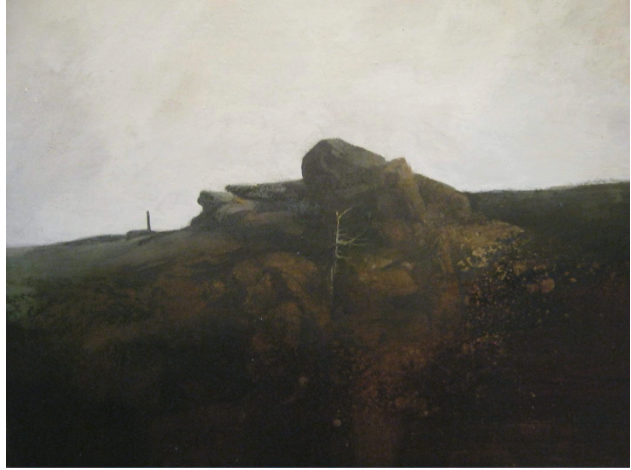
"제 작품은 구상적이라는 점에서 전통적인 화가라고 할 수 있습니다.
물론 때로는 추상적인 경향을 보이기도 하지만요. 저는 구성을 단순하게 유지하려고
노력합니다. 마치 터널 시야에 갇힌 것 같은 느낌이 들 정도입니다.
그림을 그릴 때 모든 노력과 집중은 중심 주제에 쏠리고, 나머지는 희미하게 표현되거나
암시적으로만 나타납니다. 때로는 알아볼 수 없을 정도로 희미해지기도 하는데,
이는 의도적인 것이 아닙니다. 일단 제가 생각하는 대상의 핵심을 포착하고 나면,
다른 모든 것은 무의미해지기 때문입니다. 저는 모든 에너지를 한 지점에 집중하는 경향이 있는데,
그러면 다른 모든 것은 마치 기억이나 한순간의 느낌, 혹은 스쳐 지나간 무언가처럼
사라져 버립니다. 제 작품을 통해 전달하고자 하는 것은 제가 '형언할 수 없는 신비'라고
부르는 것, 즉 영감이 불꽃처럼 타오르는 순간의 느낌입니다.
관람객에게 제가 왜 이 주제를 그리고 싶었는지, 제가 보고 느끼는 것을 다른 사람들도
보고 느낄 수 있도록 전달하는 것이 제 목표입니다." 결국 예술이란 그런 것 아닐까요?
그림 한 장이 천 마디 말보다 낫다는 말이 있잖아요.
그리고 제가 쓰는 글은 어쩌면 그보다 훨씬 더 많은 것을 담고 있을지도 몰라요.
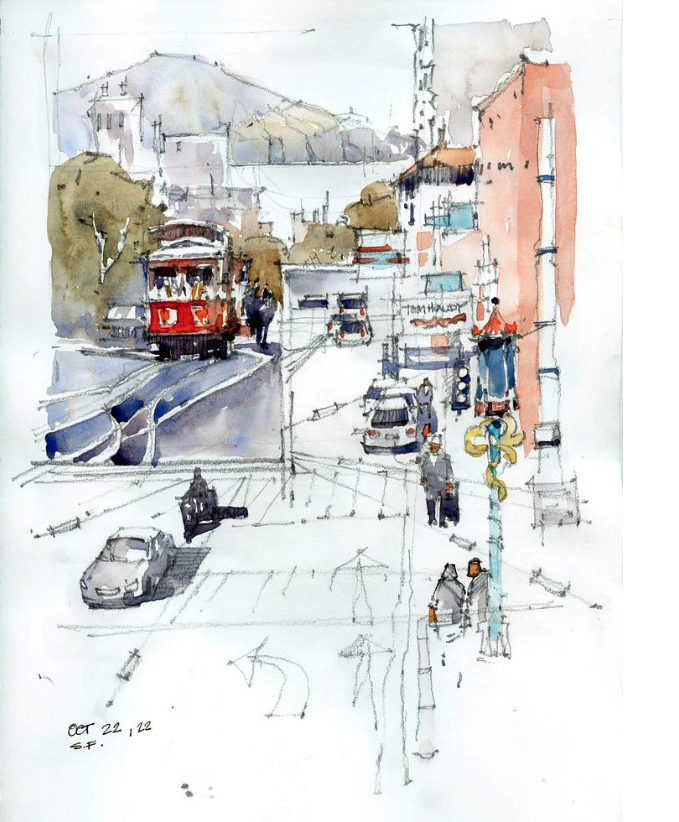
보고 느끼는 것을 기록하기에 가장 좋은 곳 중 하나는 바로 스케치북입니다.
스케치북을 그리면 마음이 편안해지고 명상하는 듯한 기분이 들죠.
나만의 스케치북에는 무엇이든 자유롭게 할 수 있어요. 실험도 하고, 창의력을 발휘하고,
새로운 기법을 시도하고, 그 안에 완전히 새로운 세계를 창조해 보세요.
“Concerning my approach to my subject, it is not simply the rendition of objects, trees, rocks, flowers, or still life,” says Darryl Glenn Steele. “Instead, my concern is painting the moment — the ambiance and the light — to capture the essence of my subject. I want my audience to experience the same attraction to my painting that I felt when I first had the desire to paint it.”
Spontaneity – the ability to respond fully to a moment of inspiration – comes from a combination of devotion to the craft and an innate openness to experience and inspiration that everybody has from childhood on. “Since childhood I have had the desire to draw and paint,” he says. “I remember epic battles in faraway lands full of dinosaurs drawn on rolls of butcher paper pulled out of early classroom closets, the feel of tempera paint on multi-colored construction paper, and the smell of a newly opened box of crayons.
“It seems to me that I have always been an artist,” he says. “I can’t imagine ever being happy doing anything else and I cannot remember a time when art was not a part of my life. And now, after all of these years, as I watch my grandchildren explore the world of art, I have come to realize that whatever it is within us that causes us to have the desire to create is something that we all are born with. I think that all children are artists and maybe all artists are still children in a way. I am sure that whether it be painting, sculpting, drawing, writing, music, dance, architecture, or film, the one thing that we all as artists have in common is that spark of inspiration within, and it is only the mediums and processes that differentiate one artist from another.”
“Looking back, I doubt that my seventh-grade art teacher ever said more than two words to me, but from the time we entered his classroom until the bell rang, we sat in the darkened room and practiced drawing day in and day out. I owe him a debt of gratitude for he was the one who drummed it into my head that if you wanted to be an artist you had to learn to draw.
Why Drawing Matters – and What it Actually Is
“Drawing is more than just hand-eye coordination,” Steele says. “It is, in one word, understanding. I remember a Wyeth exhibition that came to town a few years ago. In the exhibit were several pencil drawings of Christine’s withered arm. Wyeth knew that before he could paint Christine’s World he would have to understand her withered arm. I am convinced that he knew as much about the anatomy of her arm as any surgeon. I make this point only to emphasize the importance of knowing your subject. Good writer’s say “write what you know,” well I think the same goes painters . . . paint what you know.
“I consider myself a ‘self-taught’ artist, only because I have had a limited formal education in the arts, but I have learned something from every artist that I have encountered during my lifetime, so the term “self-taught” does not really fit.
“Over the years I have studied the work of other painters and incorporated their techniques into my own work and out of this devotion my own style seems to have magically appeared. From my early years as an oil painter to my love of watercolor today, I have graduated into combining the techniques of both into my work.
“I find it difficult to articulate just how I go about painting these days, because I don’t have a set of rules or formulas. Instead each painting has its own requirements. I may begin a painting with watercolor and then glaze over it with oil, or use acrylics for an underpainting, or sometimes even use a tissue paper collage to create texture.
“I paint on paper, canvas, mat board, Masonite, or whatever substrate I have at hand, and I have even been known to use spray paint, or paint into oil with gouache. The point is that when it comes to how I approach a painting — all rules are made to be bent, and or, sometimes … broken. For me it is the end and not the means that matter.”
“That said, I am a traditional painter in the sense that my work is representational — although it does border on the abstract from time to time. I keep my compositions simple — to the point that I think I have tunnel vision. When I paint, all of the work and focus will go into the center of interest and everything else is subdued, or merely suggested — sometimes beyond recognition, and it’s not on purpose, because once I have captured what I feel is the heart of my subject then I feel like all else has become pointless. I have the tendency to focus all of my energy on one point and then everything else just fades away like a memory, or a moment in time, a feeling, or perhaps just a glimpse of something that I caught out of the corner of my eye. What I strive to communicate in my work is what I like to call the “indescribable mystery” — that feeling when inspiration sparks into flame.
“To communicate to the viewer the reason why I wanted to paint the subject in the first place; to let others see and feel what I see and feel. After all, isn’t that what art is all about? It is true you know, a picture is worth a thousand words, and the way I write, maybe much more.”
One of the best places to record what you see and feel is in your sketchbook. The relaxation it brings is meditative. You’re free to do anything in your private sketchbook — experiment, be inventive, try new techniques, create whole new worlds within its pages.”
'그림공부' 카테고리의 다른 글
| ( 그림공부 ) 봄철 미술 활동을 위한 10가지 팁 (0) | 2026.04.05 |
|---|---|
| ( 그림공부 ) 내 카운터 위의 물건들-Stuff on My Counter (2) | 2026.03.25 |
| ( 그림공부 )추상 미술에 대한 진실 - The Truth About Abstract Art (1) | 2026.02.20 |
| ( 그림공부 ) 그림에 자유로움을 더하는 방법 (구조 vs. 즉흥성) How to Loosen up Your Paintings (structure vs spontaneity) (3) | 2026.02.18 |
| ( 그림 공부 ) 예술가를 위한 영감: 학습 곡선(Inspiration for Artists: Learning Curve)) (0) | 2026.02.14 |


